(***)
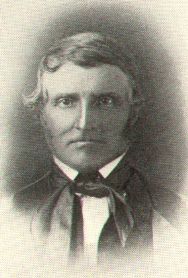
| Colonel Sylvester Blish (***)
|
| Generation: | 6 |
| Born: | December 31st, 1790 |
| Birthplace | Glastonbury, Connecticut, USA |
| Died: | October 8th, 1855, at about age 65 |
| Died at: | Wethersfield, Illinois, USA |
| Father: | Deacon Thomas Blish, (***) |
| Mother: | Prudence (Hubbard) Blish |
| Occupation(s): | Postmaster, Hotelier, Horse breeder, Tithingman, Surveyor of highways, Collector of taxes, Town agent, Fence-viewer, Selectman, Assembly member |
| Marriages: | Rhoda (Cheney) Blish At South Manchester, Connecticut, USA |
| Children: | William Henry Blish Thomas Blish Charles Cheney Blish, (***) Prudence Hubbard (Blish) Knox George Cheney Blish |
From the work of the 1st compiler, JKB-1905Sylvester Blish was a very active and energetic man. He had the fiery and impetuous temperament of his mother, combined with the determination of his father. He was public spirited and active in politics holding many public offices in Connecticut. He was lister in Glastonbury in 1815, 1817 and 1818; was tithingman 1817, 1819 and 1826; was surveyor of highways in 1820, 1821, 1823, 1824, 1825 and 1827; was on board the relief in 1822 and 1823; was collector of taxes in 1825; was grand juryman in 1828 and 1829; was town agent and fence-viewer in 1830; selectman in 1832 and 1833; and a member of the Connecticut General Assembly in 1835.He was also prominent in military matters and rose through gradual promotions until he was Colonel in the Connecticut Militia for several years before he left Connecticut, in 1836. He was one of the administrators of the estate of his brother Aaron Hubbard Blish, and also administered on the estate of his father. In 1835 a rumor was spread throughout Connecticut and Massachusetts that the Catholics were colonizing the fertile Mississippi valley with the intention of founding a Catholic hierarchy there, and a movement was inaugurated with the object of sending out Protestant colonies and settlements to counteract the Catholic movement. A stock company was organized in Wethersfield, Connecticut, for this purpose, the Reverend Caleb Tenney, of Wethersfield, and the Reverend Gardner Spring of New York, being among the leaders of the enterprise. Colonel Blish joined the Wethersfield company, which was called "The Connecticut Association." A find raised, and in 1836, Colonel Sylvester Blish, Elizur Goodrich and Reverend Ithamar Pillsbury were chosen to proceed west and purchase lands. Reverend Ithamar Pillsbury was not a member of the association, but had been in the west the preceding year, in the interest of another similar association, so that his experience was valuable. Elizur Goodrich was a surveyor. They went to Illinois, a trip that was not without considerable hardship at that time. Mr. Goodrich became discouraged by the vastness and seeming endlessness of the prairies, but Colonel Blish, encouraged by the zeal and hopefulness of Mr. Pillsbury, pushed the work to a completion. They selected and entered over fifteen thousand acres of land in Henry County, Illinois, and returned to Connecticut. Colonel Blish was so impressed with the fertility of the soil in Illinois and the future possibilities of the country, that he determined to make his home there. He sold his lands in Connecticut, and in the spring of 1837, started with his family for Illinois, making the entire trip in a carriage. His wagon, farming utensils and household effects were shipped by water to New Orleans and from thence they came up the Mississippi river to the settlement at Rock Island, about forty miles from the location of the colony lands. These lands were happily chosen. The greater portion lay to the south of a large grove of oak, walnut and hickory timber. To a person reared among the stony hills of Connecticut or Massachusetts, these vast rolling prairies, with their rich, black soil, were at once a wonder and an inspiration. A town site was laid out a little to the south of the grove and called Wethersfield. By the forms of the Association, each share of stock gave the owner the right to select a quarter section (160 acres) of prairie land, a twenty acre timber lot and a village lot, which contained two and one-half acres. A number of other colonists arrived the same year, and the season was taken up mainly with the construction of log houses and the raising of small crops to provide for the coming winter. Space forbids any extended account of the privations of these early comers or the growth and final success of the venture. The Catholic scare was purely imaginary, but the results were good for the parties concerned and for the communities planted in the new country. Three other settlements were made in the near vicinity of Wethersfield, one at Andover, by Massachusetts people, one at Genesco, by New York people and one at Providence by Rhode Island people. Colonel Blish took an active interest in the affairs of the new country and aided and encouraged its development and settlement. He became a large land owner and prospered beyond his most sanguine expectations. In 1853, a railroad was projected which would give connections to Chicago, and into this enterprise he launched with all his accustomed vigor, and in 1855 the railroad was a reality. From this time the real development of the country began. A railroad station was located a little over half a mile north of the Town site of Wethersfield, which was named Kewanee, that meaning in Indian dialect "prairie hen." Colonel Blish owned a quarter section of land adjoining the new railroad station, which is now a part of the city of Kewanee, and completely covered with factories and residences. That is east of the original village of Kewanee, while the City has now extended a mile to the west and taken in his old homestead and orchard, which was just at the south edge of the grove. Even the old Village of Wethersfield is now putting on city airs with water works, street lights and trolly cars.
Colonel Blish was for many years the post master in Wethersfield and held the same office in Kewanee, until his death, being the first post master in both places.
The greatest obstacle, with which the pioneers had to contend, was the lack of transportation facilities and their great distance from (orig spelling was "form", believe this to be a typo, CBB) available markets. A limited quantity of wheat was marketed, by teams, at Peoria, Lacon, and other river points, and occasionally at Chicago. The surest source of income was by fattening hogs, butchering and dressing them and hauling the whole carcasses to the river towns and selling them to the packing houses, or by raising cattle and selling them on the hoof to buyers, who took them away in droves to eastern points. Soon after the settlers arrived in Wethersfield, they organized a Congregational society. Meetings were held at the houses of the members, and Colonel Blish's house being the largest, was usually used. Colonel Blish was the first chorister, and the music was strictly vocal. Later a bass viol was added. In the fall of 1838, a log school house was built, and this was used for church services for some ten years. Colonel Blish was also an extensive (orig spelling was "etensive", believe this to be a typo, CBB) stock raiser and took especial pride in his horses. He brought the first Morgan horses to Wethersfield, and the effect of his labors is still apparent in the neighborhood. He was an expert horseman, and no animal was too wild for him to handle. He died 8 October, 1855, in the old house on the place on which he located on his arrival in Illinois, a new house which he was building, having been almost ready for occupancy. He is buried in the old Kewanee cemetery, which he donated to the Village, when it was first laid out. |
Colonel Sylvester Blish |
|
1231-1808 Papal Inquisition 1478-1834 Torquemadas Spanish Inquisition 1760-1820 Reign of King George III (Hanover) 1789-1796 George Washington selected 1st President 1790 Rhode Island enters the union - 13th 1790 1st official US census 1790 Coast Guard Established 1791 Federal Bill of rights adopted 1791 Vermont enters the union -14th 1792-1815 Napoleonic war 1792 Denmark 1st to forbid trade in slaves 1792 Kentucky enters the union - 15th 1793 Eli Whitney invents Cotton Gin (increases need for slaves) 1793 Marie Antoinette beheaded 1794 Slavery abolished in French colonies 1794 US Navy Established 1794 US Post Office Established 1796 Tennesee enters the union - 16th 1796 Vaccination against Smallpox 1796-1800 John Adams elected 2nd president of US 1796 Frances presses get right of free speech 1798 Lithography 1798 Mississippi organized as a territory 1798 US Marine Corps Established 1798-1800 Undeclared war with France 1799 Rosetta Stone found 1800 US capital moves from Philadelphia to Washington DC 1800 1st Battery (Volta) 1800-1809 Thomas Jefferson elected president of US 1800 Russia annexes Georgia 1802 Babylonian cuniform deciphered 1803 Fulton propels vessel by steampower 1803 Louisiana Territory Purchased 1803 Ohio enters the union - 17th 1804-1806 Lewis and Clark Expedition 1804 Haiti independent - 1st black country in West. Hemis. 1805 Thomas Jefferson re-elected president of US 1805 Morphine isolated 1807 Robert Fulton makes 1st practical steamboat voyage 1808 Import of new slaves into US Is banned 1808 Pompeii excavation begins in earnest 1809-1816 James Madison elected president of US 1809 Charles Darwin born 1810 US pop. reaches 7.2 million 1810 Homeopathy founded 1812-1814 War of 1812 1812 Missouri organized as a territory 1812 Louisiana enters the union - 18th 1815 French outlaw slavery in France 1815 Battle of Waterloo 1815 Sumbawa volcano (Indonesia) erupts; 50,000 killed 1816 Photographic Negative 1816 Indiana enters the union - 19th 1816 Stethoscope 1817-1825 Erie canal constructed 1817 Alabama organized as a territory 1817 Mississippi enters the union - 20th 1817-1824 James Monroe president of US 1817 Pentrich Revolution - Englands last revolution 1817-1823 1st Cholera pandemic 1818 Jackson Purchase - Kentucky lands 1818 Savannah 1st steamship to cross the Atlantic 1818 Illinois enters the union - 21st 1819 Alabama enters the union - 22nd 1819 Oersted discovers electro-magnetism 1819 Arkansas organized as a territory 1820-1830 Reign of King George IV (Hanover) 1820 Maine enters the union - 23rd 1821-1829 Greek war of Independence 1821 Missouri enters the union - 24th 1821 US pop. reaches 9.2 million 1821 1st US womens college 1822 Florida organized as a territory 1824-1828 John Quincy Adams president of US 1824 Internal Combustion Engine 1824 Erie canal finished 1826 1st railroad tunnel (England) 1827 Ohms Law formulated 1827 1st Black newspaper Freedoms Journal 1827 Ships propeller (screw) 1828 1st railroad in the US 1828-1836 Andrew Jackson president of US 1828 1st Websters Dictionary 1829 1st US patent on a typewriter 1829-1851 2nd Cholera pandemic 1830-1837 Reign of King William IV (Hanover) 1830 Mormons (Latter Day Saints) founded 1830-1860 Underground railroad leads 100,000+ slaves to freedom in US 1832 Horse-drawn trolleys in New York 1832 Black Hawk War 1833 Telegraph 1833 Slavery abolished in British Empire (home and colonies) 1834 Modern computer conceived by Charles Babbage 1835-1842 2nd Seminole War 1835 Halleys Comet 1835 Mormon leader Joseph Smith prophesies of coming of lord by 1891 1836 Texas war for independence from Mexico 1836 Arkansas enters the union -25th 1836 Battle of the Alamo 1837 Michigan enters the union - 26th 1837-1840 Martin Van Buren president of US 1837-1901 Reign of Queen Victoria (Hanover) 1837 Depression and Panic in the US - inflation, speculation 1838-1839 Forced relocation of Cherokee 1839-1842 Opium war between China and the English 1841-1844 John Tyler president of US 1842 Chinese cede Hong Kong to the English 1844 1st telegraph line message, Washington to New York 1845 Texas enters the union - 28th 1845-1848 James K Polk president of US 1845 Florida enters the union - 27th 1845-1849 Irish Potato Famine 1846 Iowa enters the union - 29th 1846-1848 The Mexican-US War 1848 NY allows women to own real estate 1848 Oregon organized as a territory 1848 Wisconsin enters the union - 30th 1848-1856 1st gold rush in California -- Sutters Mill 1849-1852 Zachary Taylor president of the US 1849 Fizeau measures speed of light 1850 Utah (included Nevada) organized as a territory 1850 US pop reaches 23 million 1850 California enters the union - 31st 1850 New Mexico organized as a territory 1850 World pop. est. at 1.1 billion 1850 W. H. F. Talbot develops idea of halftone printing 1851 Gold rush in Australia 1852-1859 3rd Cholera pandemic 1853-1856 Franklin Pierce president of US 1853 Washington (included pt. of Idaho) organized as a territory 1854-1856 Crimean War 1854 Nebraska organized as a territory 1854 Kansas organized as a territory |
 For many years after his arrival in Wethersfield, Colonel Blish kept the only hotel in Wethersfield. The old oval sign stood upon a post, with the words: "S. BLISH INN" painted thereon. His house was the stopping place for the stage lines which traversed the country before the advent of railroads.